Lake Simcoe & Lake Couchiching Waterfront Real Estate Market Update: 2026 vs. 2025

Waterfront real estate has always been a market of its own. From shoreline characteristics and water depth to exposure, accessibility and year-round usability, the factors influencing waterfront property values extend well beyond square footage and lot size.

The first nine months of 2026 reveal some particularly interesting trends for residential waterfront properties along Lake Simcoe and Lake Couchiching in Barrie, Oro-Medonte and Orillia.

While median selling prices increased, properties took longer to sell, and a growing number of waterfront homes were listed but ultimately failed to find buyers.

So, is the waterfront market strengthening or becoming more challenging?

The answer is more nuanced than the headlines might suggest.

1. Waterfront Market Statistics: January–September 2026 vs. 2025

To better understand local waterfront market conditions, I analyzed residential waterfront resale transactions in Barrie, Oro-Medonte and Orillia for January 1 through September 30 in both 2025 and 2026.

Market Indicator20252026Change
Median Original List Price$1,437,450$1,649,900+14.8%
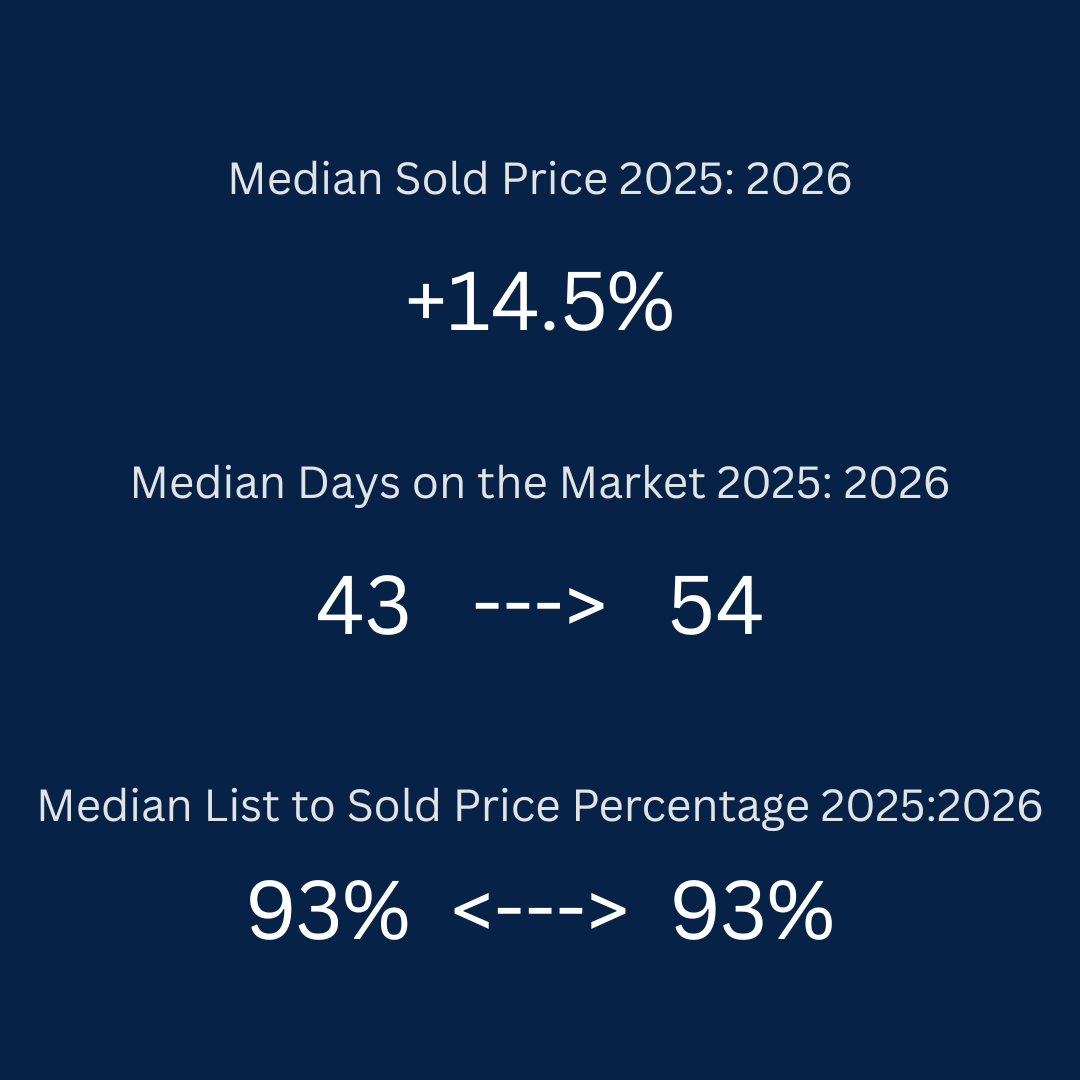
Median Selling Price$1,310,500$1,500,000+14.5%
Days on Market4354+25.6%
Reported List-to-Sold Ratio93%93%Unchanged
Completed Sales1819+5.6%
Properties Expired/Terminated Without Selling3443+26.5%
Lowest Selling Price$700,000$849,000—
Highest Selling Price$3,107,500$3,700,000—

Source: Local MLS residential waterfront resale data. Expired and terminated figures represent unique properties that did not subsequently sell, with each property counted only once.
2. Median Waterfront Selling Prices Increased 14.5%

With only 18 transactions in 2025 and 19 in 2026, the sample admittedly is relatively small. Nonetheless, perhaps the most attention-grabbing statistic is the increase in median selling price from $1,310,500 in 2025 to $1,500,000 in 2026. That's an increase of $189,500, or approximately 14.5%.

At first glance, these figures might suggest that waterfront property values have appreciated significantly. However, there's an important distinction.

An increase in median selling price does not necessarily mean all properties have appreciated by the same percentage. Interpreting real estate statistics requires more than simply comparing selling prices.
3. The Most Revealing Statistic May Be the Properties That Didn't Sell

Most real estate market reports focus almost exclusively on completed sales. But what about the properties that were listed and never sold? This is where our waterfront analysis becomes particularly interesting.

During the first nine months of 2025:

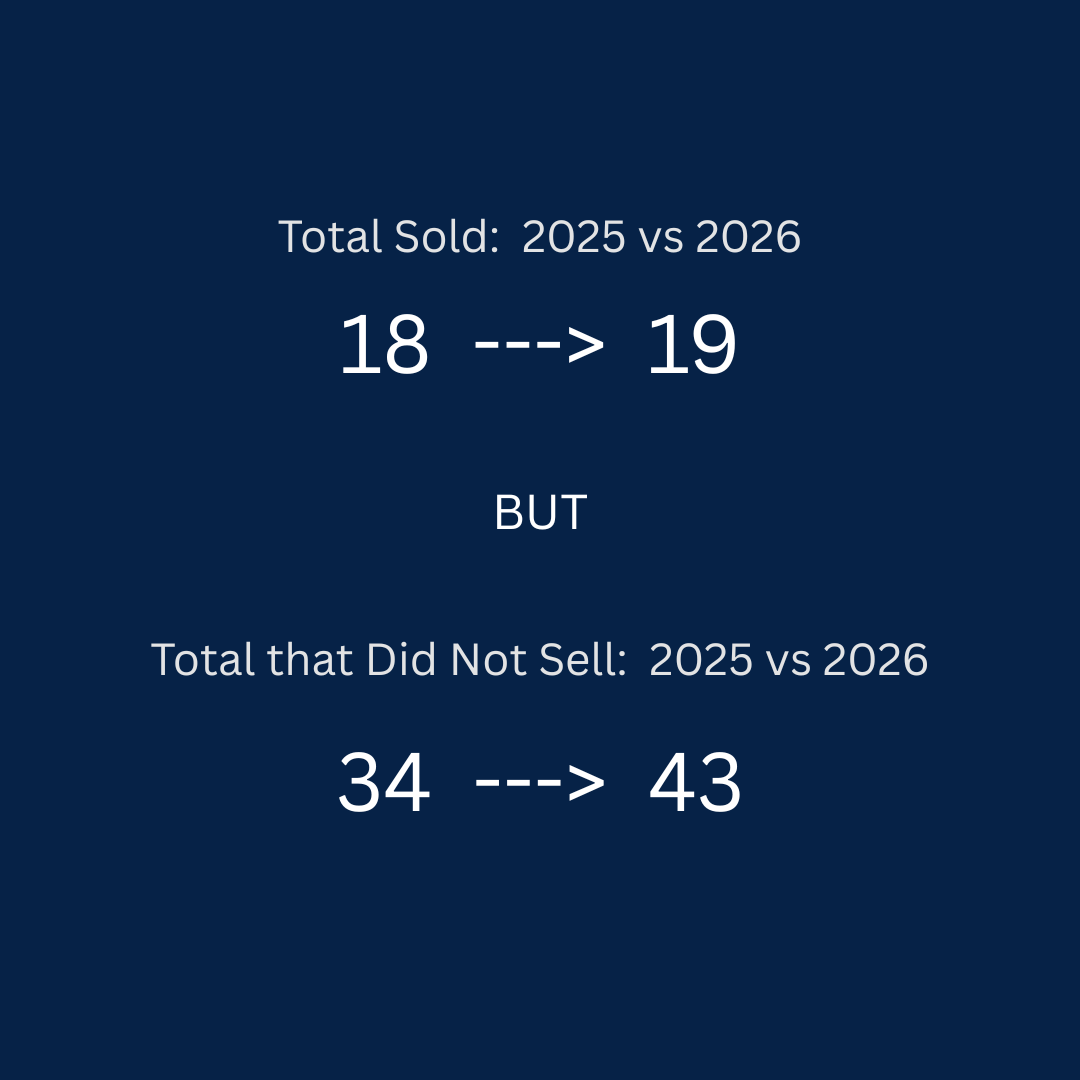
  • 18 waterfront properties sold.

  • 34 additional unique properties expired or were terminated without selling.

During the same period in 2026:

  • 19 waterfront properties sold.

  • 43 additional unique properties expired or were terminated without selling.

While completed sales increased modestly by 5.6%, the number of properties that failed to sell increased by 26.5%.

Among the properties included in these two outcome categories, completed sales represented 34.6% in 2025 and 30.6% in 2026. That's a decline of approximately four percentage points. (Importantly, each unsuccessful property was counted only once, even if it had been listed multiple times. Properties that eventually sold were excluded from the unsuccessful group).

Another notable finding is the increase in days on market. In 2025, waterfront properties spent 43 days on the market, compared with 54 days in 2026. That's an increase of 11 days, or approximately 25.6%.

These findings suggest that achieving a successful waterfront sale may have become more challenging.

Higher median selling prices and a more difficult selling environment can exist at the same time.

4. How Does This Compare With the Broader Ontario Real Estate Market?

According to the Canadian Real Estate Association and Ontario Real Estate Association, Ontario's residential resale market experienced softer conditions during the first nine months of 2026.

Across the province:

  • Average residential selling price: $813,003, down 3.1% year over year.

  • Residential transactions: 122,756, down 3.2% year over year.

In comparison, our local waterfront sample recorded a 14.5% increase in median selling price and a 5.6% increase in completed sales.

What About Properties That Fail to Sell?

An additional perspective comes from HouseSigma's analysis of the Greater Toronto Area residential resale market in 2025. According to this, approximately 47.4% of the 110,564 unique residential properties listed during 2025 did not sell, including listings that expired, were terminated or remained active.

In our local waterfront analysis, the proportion of unsuccessful outcomes among properties that either sold or expired/terminated without selling was 65.4% in 2025 and 69.4% in 2026.

Both analyses highlight an important consideration: listing a property and successfully selling it are two very different things. Selling a waterfront property requires an even greater competitive edge.

5. Pricing Strategy Remains Essential

Despite the increase in median selling prices, the reported list-to-sold ratio remained at 93% in both years. This suggests that negotiation continued to play a meaningful role in waterfront transactions. Combined with the growing number of properties that failed to sell, the findings reinforce the importance of establishing an appropriate asking price from the beginning.

Waterfront properties are highly individual. Two homes with similar square footage and lot sizes can command dramatically different prices depending on shoreline exposure, water depth, views, privacy, property condition and accessibility.

An effective pricing strategy needs to account for these characteristics, as well as recent comparable sales and current competing properties.

6. What Does This Mean for Waterfront Buyers?

For buyers considering Lake Simcoe or Lake Couchiching waterfront real estate, the current market presents some interesting considerations.

Longer selling times and an increase in unsuccessful listing outcomes suggest that some sellers may be encountering greater difficulty finding qualified buyers. This may create opportunities for purchasers who are well-prepared and understand the market.

However, not all waterfront properties are interchangeable. A property with desirable shoreline characteristics, excellent exposure, deep water access or exceptional privacy may attract significantly different interest than another property at a similar asking price.

Buyers should carefully evaluate individual property characteristics, comparable sales, inspection considerations and the long-term suitability of the property for their needs. The objective isn't simply to negotiate a lower price. It's to understand the property's true value.

7. What Does This Mean for Waterfront Sellers?

For waterfront sellers, the findings are particularly important.

Although median selling prices increased, the number of unique properties that expired or were terminated without selling also increased substantially. This suggests that achieving a successful sale requires more than simply bringing a waterfront property to market.

Three considerations are especially important:

Accurate pricing: Understanding the value of specific waterfront characteristics and how a property compares with recent sales and current competition.

Thoughtful preparation: Presenting the home and waterfront setting in a way that highlights their strongest features and helps buyers appreciate the property's lifestyle potential.

Targeted marketing: Reaching buyers who are specifically interested in waterfront living and communicating the features that make the property unique.

Waterfront properties can appeal to a very specific buyer pool, making an informed and carefully developed marketing strategy particularly valuable.

8. Final Thoughts: Understanding the Story Behind the Statistics

The first nine months of 2026 paint a fascinating picture of the Lake Simcoe and Lake Couchiching waterfront resale market in Barrie, Oro-Medonte and Orillia.  It shows that, with the right property, your home can maintain (and/or increase) in value despite overall market conditions. This ideally provides confidence to buyers who can enjoy their new waterfront property for years to come. And then, if they choose to sell, they will know that they can achieve return on investment with proper pricing and a tailored marketing strategy. 

Thinking About Buying or Selling Waterfront Property?

I believe knowledge is one of the most valuable tools in real estate, especially as it pertains to rural waterfront properties.

My goal is to help you understand the market, recognize opportunities and make confident decisions based on meaningful information.

If you're considering buying or selling on Lake Simcoe, Lake Couchiching or Georgian Bay, I'd be happy to help you explore your options and develop a strategy tailored to your goals.

Kim Melhuish | REALTOR®
Helping you navigate real estate with knowledge, care and confidence.


Sources and methodology: Local MLS residential waterfront resale data for Barrie, Oro-Medonte and Orillia, January 1–September 30, 2025 and 2026; CREA/OREA September 2026 Ontario market statistics; HouseSigma January 2026 GTA residential resale analysis. Local unsuccessful listing counts represent unique properties, excluding properties that ultimately sold. Active listings are not included in the local outcome proportions.

Read

Market Update - December 2025 for Oakville, Burlington and Milton - KMrealhomes

A Tale of Two Markets

As 2025 came to a close, the Halton real estate market didn’t deliver any dramatic twists — but it did quietly reinforce some important trends that buyers and sellers should be paying attention to.

December finished somewhat listlessly (yes, pun fully intended), with slower activity and longer timelines across most segments. That said, when you look a little closer, the story varies significantly depending on location and housing type. Oakville, Burlington, and Milton are not moving in lockstep — and neither are detached homes versus townhomes and condos.

Here’s what stood out as we wrapped up the year.


Detached vs. Attached Homes Across Halton

Across Halton as a whole, detached homes experienced the most noticeable price pressure in 2025.

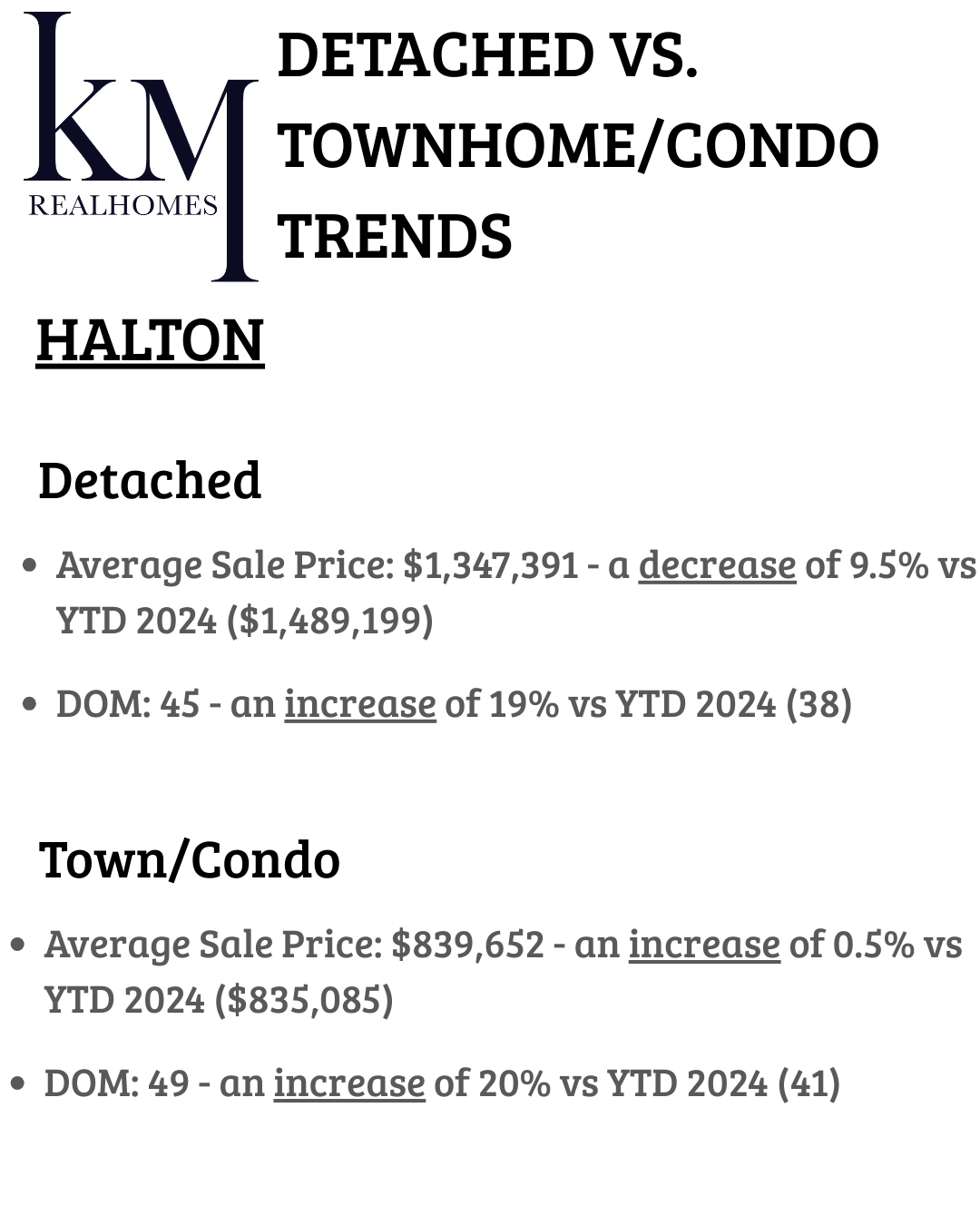
  • Detached homes finished the year with an average sale price of $1,347,391, down 9.5% year over year, while days on market increased to 45 days.

  • Townhomes and condos, on the other hand, remained relatively stable, with an average sale price of $839,652, up a modest 0.5% year over year, though days on market also increased to 49 days.

The takeaway here is affordability. As borrowing costs and price sensitivity continue to shape buyer behaviour, attached homes have benefited from their lower entry point, keeping demand more consistent throughout the year.


Oakville: The Biggest Adjustment in 2025

Oakville saw the most pronounced slowdown across Halton, particularly in the detached segment.

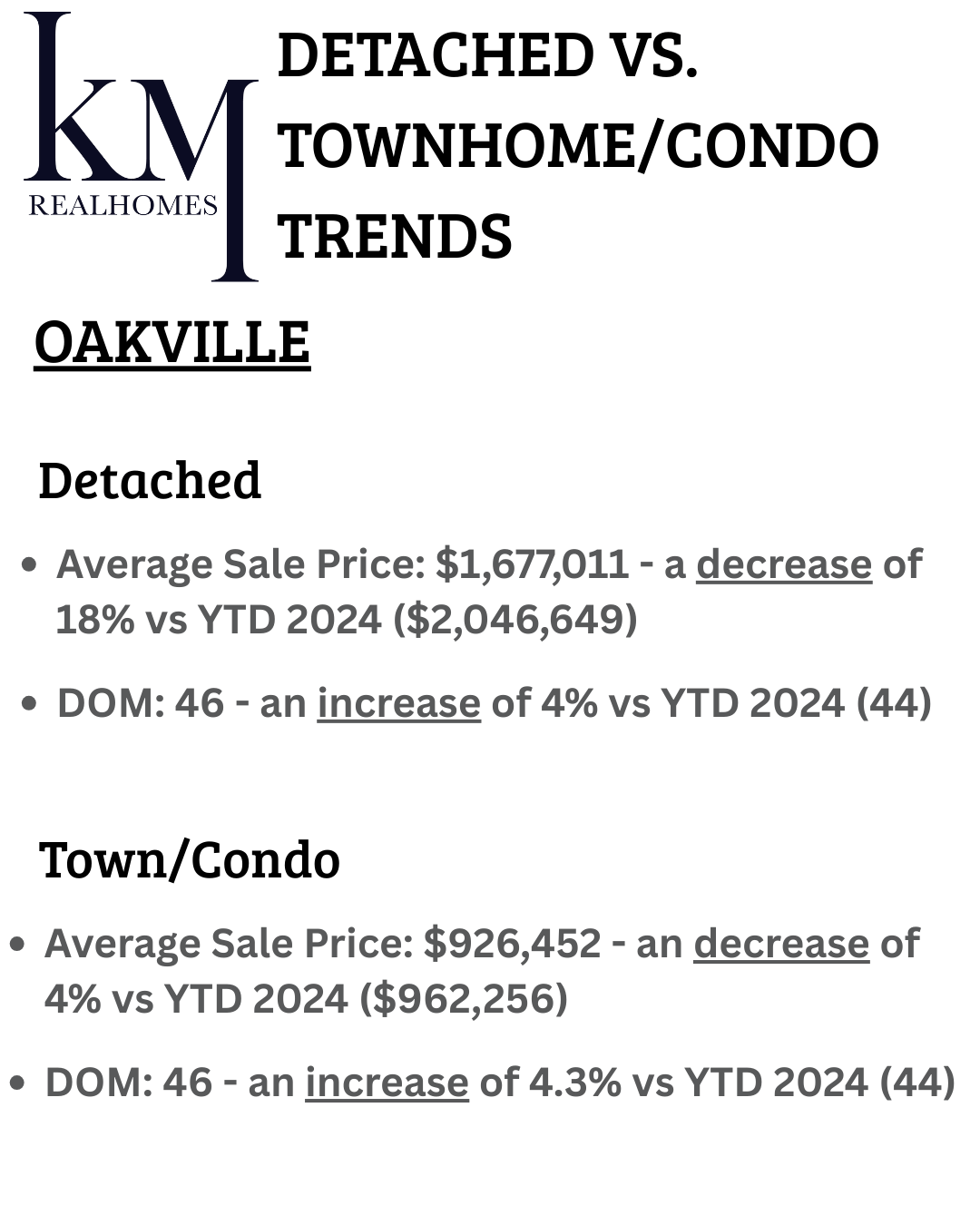
  • Detached homes in Oakville averaged $1,677,011, representing a significant 18% decrease year over year, with days on market increasing slightly to 46 days.

  • Townhomes and condos also softened, averaging $926,452, down 4% year over year, with similar days on market.

This adjustment has been driven largely by price. Oakville’s higher-end detached neighbourhoods — particularly 25–35 year old communities — are seeing more downsizers and fewer move-up buyers, creating opportunities for well-positioned purchasers who are patient and prepared.

For buyers, Oakville may offer some of the best value opportunities heading into 2026.
For sellers, realistic pricing and strong presentation are more important than ever.


Burlington: Holding Its Ground

Burlington has quietly been the most stable market in Halton.

  • Detached homes averaged $1,242,998, down 9.5% year over year, with days on market increasing to 46 days.

  • Townhomes and condos were a bright spot, finishing the year at $725,684, up 2% year over year, despite slightly longer selling timelines.

This relative stability reflects Burlington’s strong appeal across multiple buyer groups — from first-time buyers to downsizers — and its balanced mix of housing options.

Burlington sellers, particularly in the attached market, remain in a solid position as we head into the new year.


Milton: Price Sensitive but Active

Milton continues to reflect a more price-sensitive market.

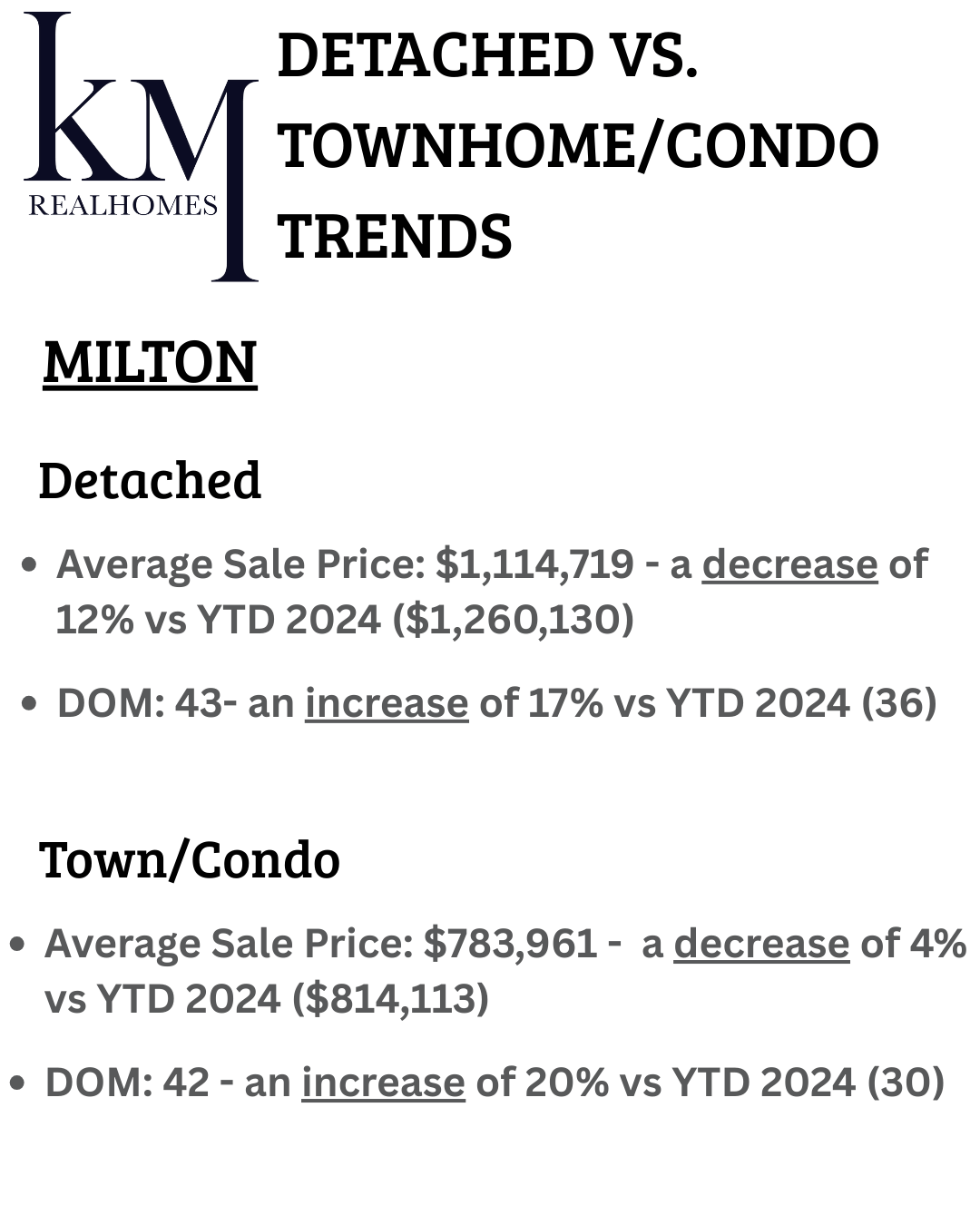
  • Detached homes averaged $1,114,719, down 12% year over year, with days on market increasing to 43 days.

  • Townhomes and condos averaged $783,961, down 4% year over year, with days on market rising to 42 days.

While pricing has softened, activity has remained relatively steady thanks to Milton’s lower overall price point compared to Oakville and Burlington.


What This Means Heading Into 2026

  • Buyers may find the strongest negotiating opportunities in Oakville, particularly in established detached neighbourhoods where some owners are looking to downsize.

  • Sellers in Burlington are still well positioned, provided pricing aligns with current conditions, to sell.

  • Across Halton, longer days on market are becoming the norm — strategy, preparation, and local insight matter more than ever.

As always, market statistics are most meaningful when applied at a neighbourhood and property-type level. A detached home in one Oakville neighbourhood can perform very differently from another just a few kilometres away.

If you’d like to dig deeper into how these trends apply to your specific home or buying plans, I’m always happy to walk through the numbers and strategies with you.

Read

Market Update - February 2025 for Oakville, Burlington and Milton - KMrealhomes

Here is a summary of the market trends for Detached Homes in Oakville, Burlington and Milton Ontario.  I’ll be looking for more consistency moving into the Spring market and with the recent rate reductions. Reach out if you want more specific information pertaining to a specific neighbourhood within these regions because each community has its own micro-statistics with varying nuances. I’m happy to provide similar for towns, semis and condos.

Oakville Detached Market – While February did show an uptick compared to January, there was a lot less activity compared to this time last year.  What this means? Sellers may need to plan for houses to be listed for a longer time before selling (avg 27 days); however, the dollar value will be similar to what we’ve been seeing over the past year.   For buyers, you have a lot of choice and don’t need to rush your decisions. 

Burlington Detached Market – As with Oakville, there was some recovery in the sale prices in February compared to January. Unlike Oakville, the market is very active still which results in a more balanced Buyer-Seller market.  Even though houses are taking an average of 24 days to sell, it will be harder to find “deals” as there is enough demand to satisfy Sellers’ motivations.

Milton Detached Market – We unfortunately didn’t see the same rebound that Oakville did from the January lows.  The market in general is sitting lower than it did compared to this time last year. What this means?  Sellers are finding themselves with price reductions and sitting longer (avg 39 days) if not pricing appropriately at the outset. For buyers, there is plenty of choice and some good deals can be found depending on the Sellers’ motivation/need to sell.

MARKET STATS – FEBRUARY 2025 – DETACHED HOMES

Month Over Month (compared to January, 2025; MoM)

Year Over Year (compared to February 2024, YoY)


Oakville

Burlington

Milton


Average Sale Price

$2,073,016

$1,391,534

$1,177,905

MoM % Change

     +12

+3.8

-2.1

YoY % Change

     -2.4

-3.4

   -13.0


Transactions

    103

    122

     37

MoM % Change


  +26.2

  +54.4

  -33.9

YoY % Change

   -50.3

  +18.4

  -66.4

Days

      27

      24

   39


Source: OMDREB, RAHB

 Oakville:

  • Average Sale Price: $2,073,016

    • MoM: ▲ +12.0% (from $1,850,835)

    • YoY: ▼ -2.4% (from $2,124,662)

  • Transaction Volume: 77

    • MoM: ▲ +26.2% (from 61)

    • YoY: ▼ -50.3% (from 155)

Burlington:

  • Average Sale Price: $1,391,534

    • MoM: ▲ +3.8% (from $1,341,400)

    • YoY: ▼ -3.4% (from $1,440,000)

  • Transaction Volume: 122 transactions

    • MoM: ▲+54.4% (from 67)

    • YoY: ▲ +18.4% (from 103)

Milton:

  • Average Sale Price: $1,177,905

    • MoM: ▼ -2.1% (from $1,203,494)

    • YoY: ▼ -13.0% (from $1,353,548)

  • Transaction Volume: 37

    • MoM: ▼ -33.9% (from 56)

    • YoY: ▼ -66.4% (from 110)


Read

Steps For Selling a Parent's Home After They Have Passed Away - by Kim Melhuish

Losing a parent is an emotionally challenging time, and the process of selling their home can seem overwhelming. Here’s a step-by-step guide to help you navigate this process with as much ease and clarity as possible.

Steps Required Before Selling a Parent's Home After They Have Passed Away

1. Obtain the Death Certificate

Before you can take any legal steps regarding the property, you'll need to obtain a death certificate. This document is essential for dealing with banks, government agencies, and insurance companies.

2. Review the Will and Legal Documentation

Check if there is a will and identify the executor of the estate. The executor has the legal authority to manage the estate, including the sale of the property. If there's no will, the court will appoint an administrator.

3. Consult with an Estate Lawyer

Engage with an estate lawyer to understand the legal implications and processes involved in selling the property. They can provide guidance on probate, taxes, and ensure all legal requirements are met.

4. File for Probate (if necessary)

Probate is the legal process that validates the will and gives the executor the authority to act. This step might be necessary before selling the property, depending on the jurisdiction and specific circumstances. **see our blog that more specifically deals with Probate should you require more information.

5. Assess the Property's Condition

Conduct a thorough assessment of the home's condition. This includes identifying any repairs or upgrades needed to make the property more appealing to buyers. Consider getting a professional home inspection. Since you may not be fully aware of the condition of everything if you didn’t personally live in the house, the following clause in the Agreement of Purchase and Sale (APS) will be beneficial to protect you as Sellers.

  • Clause Example: "The Buyer acknowledges that the property is being purchased in an 'as-is, where-is' condition as of the date of this Agreement, and the Seller makes no representations or warranties regarding the condition of the property or any improvements thereon."

6. Clean and Organize

Clear out personal belongings and organize the home. This might be a good time to hold an estate sale or donate items to charity. A clean, clutter-free home is more attractive to potential buyers.

7. Hire a Real Estate Agent

Engage a real estate agent who has experience in dealing with estates. They can provide a market analysis, help set a competitive price, guide you in steps for preparing the house to list, and develop a marketing strategy to attract buyers. They will also ensure that very important estate-specific clauses are included to protect you as Sellers,

8. Consider Professional Staging

Professional staging can significantly enhance the appeal of the home. Staged homes often sell faster and for higher prices. Discuss this option with your real estate agent.

9. Evaluate Offers Carefully

Once the home is on the market, review offers carefully. Consider not just the price, but the terms (e.g., closing date) and conditions of each offer. Your real estate agent can help you navigate this process.  When selling a property as part of an estate sale in Ontario, it’s important to include specific conditions in the Agreement of Purchase and Sale (APS) to address the unique aspects of the transaction. For example, having a probate condition can protect you as Sellers.

  • Clause Example: "This Agreement is conditional upon the Seller obtaining a Certificate of Appointment of Estate Trustee with a Will (or without a Will, as applicable) from the Ontario Superior Court of Justice by [specific date]. If the Seller fails to obtain probate by this date, the Buyer may terminate this Agreement and all deposit monies shall be returned to the Buyer without deduction or interest."

  • Clause Example: "The closing date of this transaction shall be [specific date], or such other date as the parties may agree upon in writing, to allow sufficient time for the completion of probate and other estate-related matters."

10. Complete the Sale

Once an offer is accepted, work with your lawyer and real estate agent to complete the sale. Ensure all legal documents are in order and that the closing process goes smoothly.

11. Settle the Estate

After the sale, the proceeds will go into the estate. These funds will be used to pay any remaining debts, taxes, and eventually be distributed to the heirs according to the will or court directives.

Selling a parent's home can be emotionally taxing. Don’t hesitate to seek support from friends, family, or professional counselors to help you through this time.

Feel free to reach out if you need any assistance or have questions during this process.

Read

Understanding Air Exchange Systems: A Guide for Home Buyers and Sellers in Halton, Ontario: KMRealhomes

Homeowners prioritize comfort and energy savings. The presence of air exchange systems in newer homes is a key selling/buying feature. This guide explores these systems, explaining their value for Buyers, Sellers, and residents. We'll unpack what an air exchange system is, how it functions, its advantages, and why it matters in GTA climates, such as Oakville, Milton and Burlington.

  1. An air exchange system, or ventilation system, mechanically controls indoor air ventilation. It removes stale air from the home and replaces it with fresh outdoor air. This process improves indoor air quality by reducing pollutants, excess moisture, and odors. Halton's diverse climate, with weather extremes, makes efficient air exchange vital for year-round comfort.

  2. Air exchange systems extract stale indoor air while simultaneously bringing in fresh outside air. This exchange occurs through installed ducts and vents. Systems like heat recovery ventilators (HRVs) and energy recovery ventilators (ERVs) not only ventilate but also recover heat or energy from outgoing air to precondition incoming air, boosting energy efficiency.

  3. Installing an air exchange system offers numerous advantages: Fresh air continuously circulates, reducing indoor pollutants like dust, allergens, and volatile organic compounds. This promotes a healthier living environment. Additionally, proper ventilation ensures consistent airflow and temperature regulation, increasing comfort. Energy efficiency is another benefit, as HRVs and ERVs recover heat or energy from outgoing air, reducing strain on heating and cooling systems, ultimately lowering energy bills. Moreover, controlling humidity levels prevents mold growth and moisture-related issues. Air exchange systems help maintain optimal indoor humidity, especially important in humid climates like Halton. Lastly, by continuously bringing in fresh outdoor air, these systems eliminate stale odors, keeping the indoor environment smelling fresh and clean.

  4. In the GTA climate, characterized by hot summers and cold winters, proper ventilation is crucial for maintaining indoor comfort and preserving indoor air quality. Furthermore, with the increasing emphasis on energy efficiency and environmental sustainability, Buyers in Halton actively seek properties equipped with modern amenities like air exchange systems. For Sellers, highlighting the presence of an air exchange system can significantly enhance the marketability and value of their homes in Oakville, Burlington and Milton’s competitive real estate landscape.

Halton residents looking to buy or sell a home should prioritize air exchange systems. These systems ensure fresh indoor air, reducing pollutants like dust and mold. Enhanced airflow improves comfort, lowers utility bills, and promotes sustainable living. Savvy real estate agents highlight these systems to attract buyers valuing health and efficiency.

Feel free to reach out for more information or with any questions.

Read

Thinking of Downsizing? Things to Consider: KMRealhomes

There comes that time when the big house seems like a lot of work and no longer serves you. Downsizing can be a great idea... but it's good to consider some of these things to make sure you're making choices that fit your life and future goals.

Assess Your Needs and Goals: Evaluate why you're downsizing. Is it for financial savings, less maintenance or just for a change? What are your priorities in a new home (e.g., location, features). This will help guide your search and ensure your new home fits your lifestyle.

Start Decluttering Early: Begin the process of sorting through your belongings well in advance. Decide what to keep, sell, donate, or discard. There are so many options to repurpose items that you don't think you'll keep and avoid landfills. Downsizing is an excellent opportunity to declutter and simplify your life.

Consider Your Future Lifestyle:  Think about how you want to spend your time in your new home. If travel, hobbies, or spending time with family abroad are priorities, look for low-maintenance properties that align with those activities.

Financial Planning: Review your financial situation with a professional. Downsizing can free up substantial equity from your current home; however, when calculating your affordability for different scenarios, be sure you have accounted for all costs involved in moving (e.g., real estate commissions, lawyers, closing costs, moving services) and setting up a new home, including condo fees if you're considering a condominium.

Research Different Housing Options: There are so many different options for downsizing - from condos and townhomes to bungalows. Each has its pros and cons, so consider what type of property will best suit your needs and preferences.

Explore Different Neighbourhoods: One great idea is to go and spend time in potential areas to get a sense of what it would be like to live there. Walk the streets, go to restaurants, try some grocery shopping, see where the fitness centres are - see what a regular day might feel like. 

Understand the Market:  Work with a real estate agent who understands the local market and who can guide you through the process of selling your current home and buying a new one. Timing can be crucial, especially in a dynamic market where there are quick fluctuations.

Plan for the Move: Moving from a larger to a smaller space is done best with careful planning. Consider hiring professional movers who can help with packing and unpacking and sending items to the appropriate donation, auction site or marketplace. Sometimes it's hard to know where to begin and so a professional mover will organize your process.

Make Your New House a Home: Personalize your new space with items that bring you joy and comfort. The goal is to make your new, smaller home feel welcoming and perfectly suited to your new phase of life.

Stay Flexible and Open-minded: Without a doubt, downsizing can be an emotional journey. Be open to new possibilities and remember that adjusting to a smaller space might take time, but it can also bring a sense of freedom and incredible new opportunities for a fulfilling lifestyle.

Feel free to reach out for more information about downsizing or for assistance in starting this incredible process - great things await!


Read
This website may only be used by consumers that have a bona fide interest in the purchase, sale, or lease of real estate of the type being offered via the website. The data relating to real estate on this website comes in part from the MLS® Reciprocity program of the PropTx MLS®. The data is deemed reliable but is not guaranteed to be accurate.